
Ghosts

After Cara Mujer

some silences, like soured linens,

the too long gone on

uncleanness

in dreams, smells become characters

that speak and move

one of you, in a house

of so many empty rooms you offer

but my child will not sleep

a billowing curtain is some

historical, hysterical woman

in a red floral print

she will not quit her haunting

until a tall opera singer

blasts the hallway with her clear

supersonic voice

one of you, you come to my house

while it is being built, I have

to wrestle the door moulding from your hands

and ask you to leave

one of you, I find you dressed as a teacher in the back pews of religious high school assembly with my old bible/computer science instructor, and I mutter through the sermon and the children ask me to leave

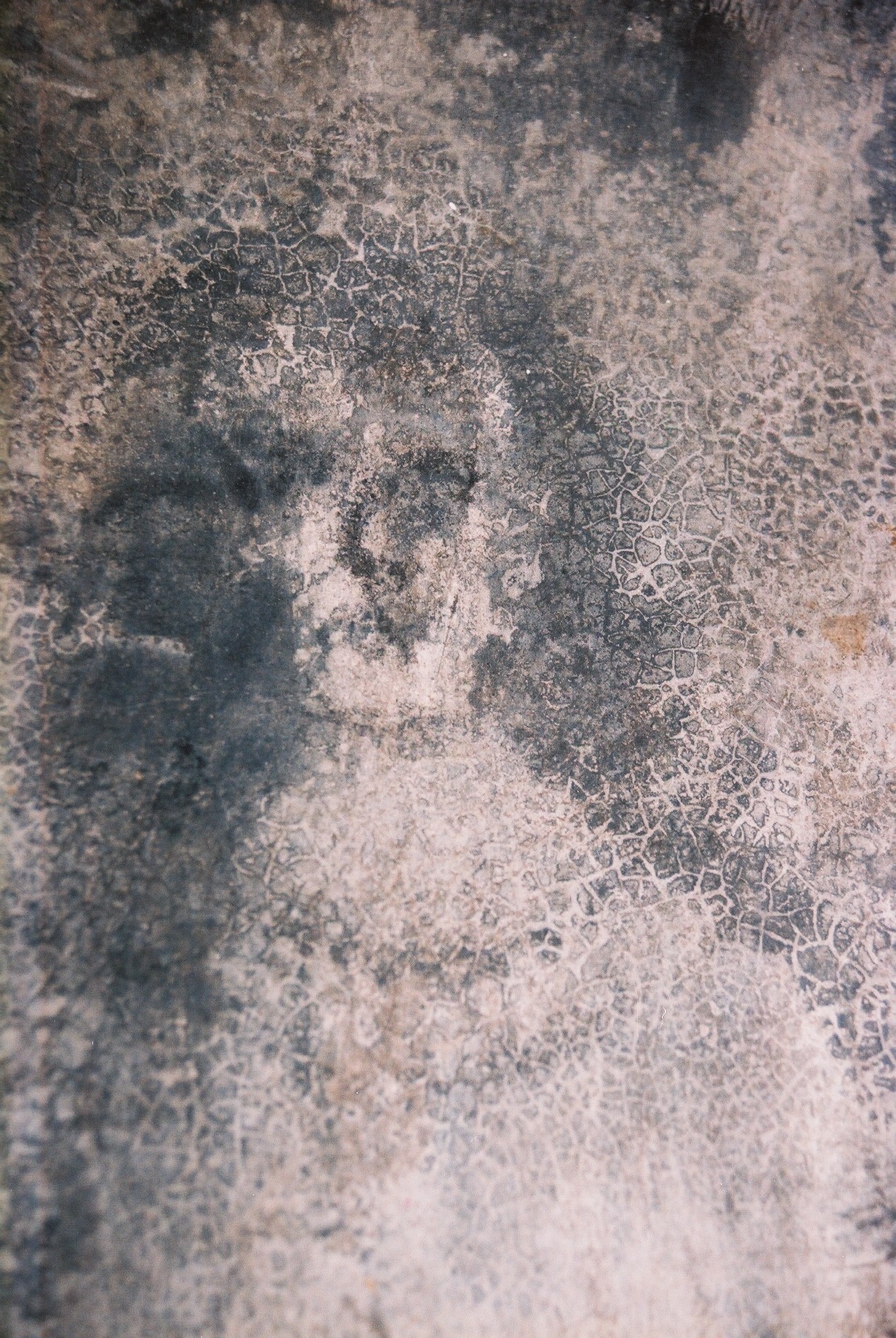
these vapors

and their faces

take so long to wash out
Comments

Popular posts from this blog

"Self-Portrait as Medusa in Shock" Jayme Ringleb

"Self-Portrait as Medusa in Shock, " Jayme Ringleb, Puerto Del Sol Online, is such a lovely and challenging ekphrasis. I won't quote any of it, because there is this seductive kind of movement in the poem, like very classy striptease, a dance of veils, or the pulsing of a jellyfish, that when relaxed, its nearly transparent arms floating away from the body, allows you to see more clearly through what when held tightly concealed those mysterious internal structures. The layers of ekphrasis in this poem are constructed like a nesting doll, each stanza with a lovely similarity, a theme, but each leading more intimately to the interior. The poem begins in the natural world of the jellyfish, which is written over by classical myth that shares the creature's name, which in turn is compared to Biblical stories of resurrection, before the poem finally turns toward memoir. There the poem compares this idea of the classical Medusa, being confronted by her own fatal image t...

Armantrout's Feminist Poetics and the Meaning of Clarity

Because it doesn't seem to exist in digital form AT ALL, here's my annotation for this totally foundation feminist poetics essay. Rae Armantrout’s foundational essay “Feminist Poetics and the Meaning of Clarity,” offers a way of understanding the social in experimental poetry that is critical of a particular type of lyric subjectivity, described as univocal, closed, Romantic, imperial, and appropriative. For Armantrout, the stable poetic subject is inherently appropriative, serving epiphany demanded by mainstream form, constructed by metaphor’s appropriative nature. Armantrout specifically calls out the type of poems that most agree constitute conventional poetry of witness: “The conventional or mainstream poem today is univocal, more or less plainspoken, short narrative, often culminating in a sort of epiphany” (Armantrout 288). Elaborating, Armantrout argues that “such a form must convey an impression of closure, and wholeness, no matter what it says” (288). Closure an...

The Imaginary Poet

Often in lyric poetry we get wrapped up in ourselves--what is true to us. I think it is much more interesting to lie outrageously. Check out this issue of Blackbird online. It has a feature, "Tracking the Muse," with commentary by various poets about their process. Here's a link to Jehanne Dubrow's "Notes Toward a Nonexistent Poet." http://www.blackbird.vcu.edu/v7n1/features/muse/dubrow_j.htm It is great. She starts off suggesting you lie a little bit about yourself, making up an experience you never had, like a childhood overseas. But she progresses toward creating a whole fictional poet and writing poems for her. While the amount of research needed for a whole book of works by a fictional poet might be a little more than a Wednesday afternoon will permit, you could pick a person you know and write a poem as them, or as a famous person, or as a made-up person. My poet is Sara Johnston. She's from North Carolina, daughter of an Airforce captain, and her ...